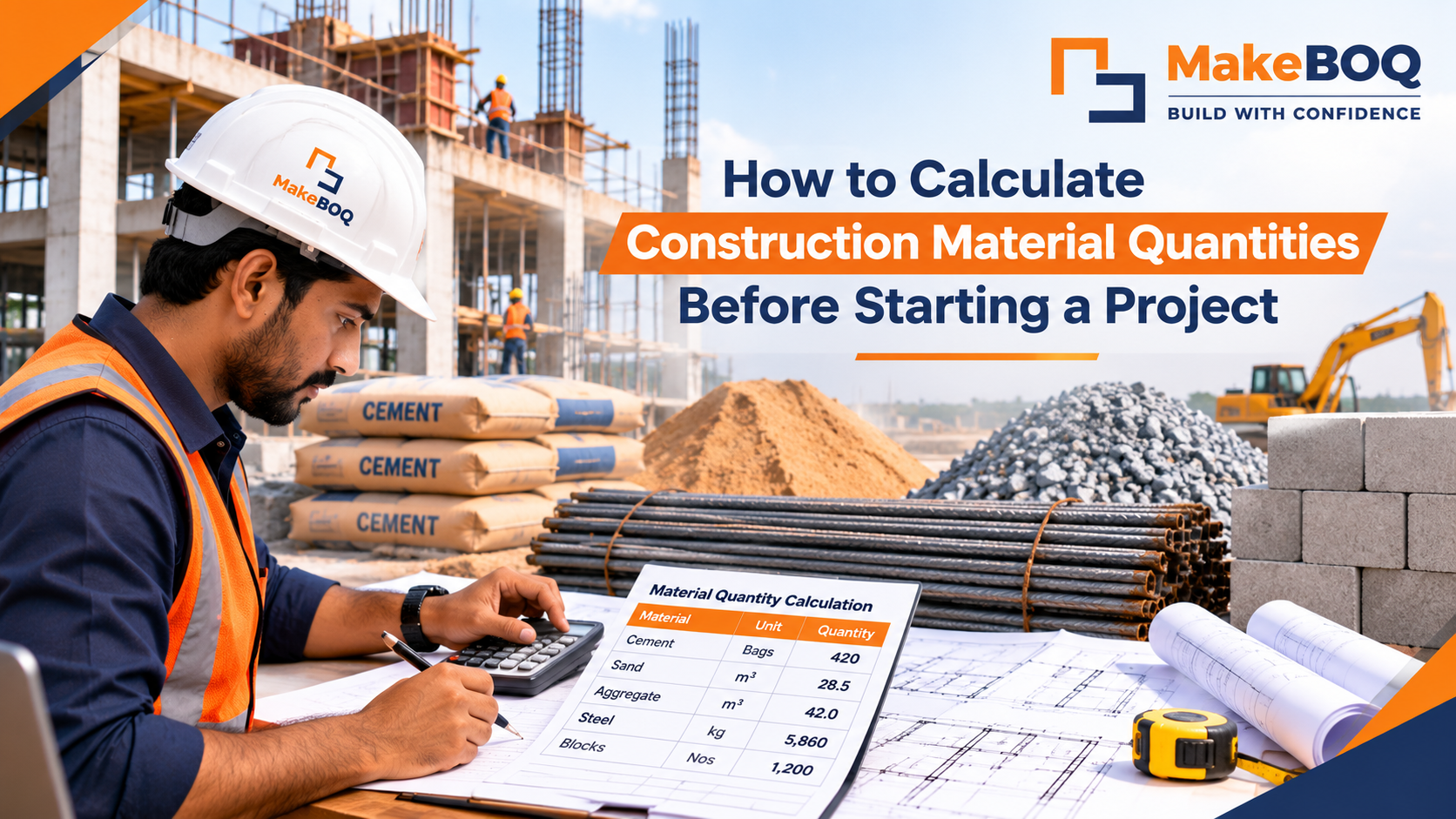
How to Calculate Construction Material Quantities Before Starting a Project
Introduction
Material estimation is an important part of construction planning. Purchasing too much material increases expenses, while insufficient materials can delay construction work.
Common Construction Materials
A typical construction project requires:
- Cement
- Sand
- Coarse aggregates
- Reinforcement steel
- Bricks and blocks
- Tiles
- Paint and finishing materials
Steps for Material Estimation
1. Study Building Drawings
Review architectural and structural drawings to understand dimensions and specifications.
2. Calculate Concrete Volume
For a rectangular structure:
Volume = Length × Width × Height
3. Estimate Cement, Sand and Aggregates
Calculate material requirements based on the approved concrete mix design or applicable estimation method.
4. Calculate Steel Quantity
Consider reinforcement diameter, length, spacing, bends and laps.
5. Estimate Finishing Materials
Calculate the quantities required for plastering, flooring, painting and other finishing activities.
Benefits of Accurate Estimation
- Reduces material wastage.
- Improves purchasing decisions.
- Supports budget planning.
- Helps avoid project delays.
- Improves cost control.
Conclusion
Proper material estimation helps construction professionals manage resources effectively and maintain better project budgets.
MakeBOQ – Build With Confidence.